Ro-Ro vs. Container: The Safest & Cheapest Way to Ship EVs from China
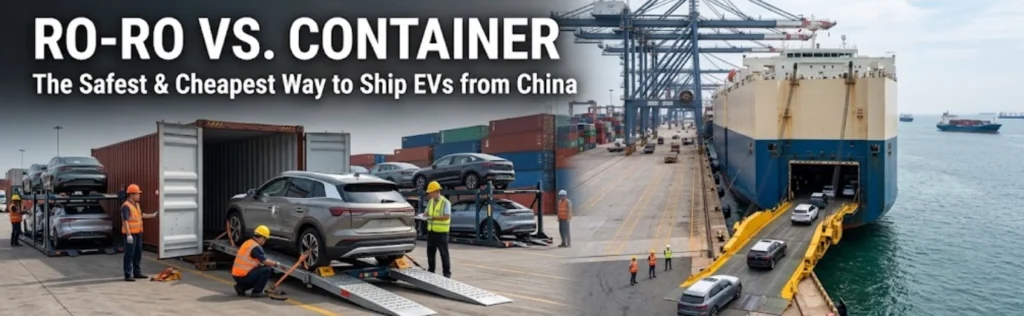
When exporting Electric Vehicles (EVs) from China, buyers face a critical logistics choice: Roll-on/Roll-off (Ro-Ro) or Container shipping. Currently, container shipping—specifically utilizing 40HQ containers with specialized racking systems—is the most cost-effective and reliable method for most buyers. While Ro-Ro offers simplified loading, severe vessel shortages have caused freight rates to skyrocket and delayed shipments by months. Container shipping provides flexible, weekly scheduling and robust vehicle protection, provided your logistics partner adheres strictly to EV battery safety and secure lashing protocols.
Why Ro-Ro is Becoming Less Viable for SME Buyers
Ro-Ro vessels act as massive floating parking garages. Vehicles are simply driven aboard, eliminating the need for complex packing and un-stuffing procedures. Historically, this was the gold standard for auto exports.
However, China’s unprecedented surge in EV exports has completely overwhelmed global Ro-Ro capacity. Booking a slot often requires waiting 1 to 3 months, and freight rates command a massive premium. For independent dealerships or SME buyers ordering less than 50 units, securing Ro-Ro space is not only highly impractical but ties up critical cash flow during long waiting periods.
Container Shipping: Overcoming Safety and Scratch Risks
Shipping EVs in standard marine containers (20FT or 40HQ) guarantees much faster departure times and significantly lower freight costs. Many buyers hesitate due to fears of lithium battery fire risks and body scratches during transit, but these are entirely mitigated through professional handling.
- Secure Lashing & Racking: EVs are heavier than internal combustion engine (ICE) vehicles due to their battery packs. We utilize specialized heavy-duty steel car racks and wheel chocks. This allows us to safely stack three to four EVs inside a single 40HQ container without any structural strain, suspension damage, or risk of transit scratches
- Battery Safety Compliance: Shipping EVs requires strict adherence to the IMDG Code for hazardous materials (Class 9). Safety protocols include physically disconnecting the 12V auxiliary battery, keeping the main lithium-ion battery at a low State of Charge (SoC < 30%), and thoroughly insulating all battery terminals to prevent short circuits at sea.
| Feature | Ro-Ro Shipping | Container Shipping (40HQ) |
| Cost Efficiency | Extremely High (Premium pricing) | High (Shared container space) |
| Wait Times | 1-3 Months (Severe vessel shortages) | 1-2 Weeks (Regular weekly sailings) |
| Safety Focus | Drive-on, zero packing required | Requires specialized lashing and racks |
| Best For | Massive OEM bulk orders (1000+ units) | SME buyers and dealerships (1-50 units) |
Our End-to-End EV Logistics Solution
We don’t just source Chinese EVs; we ensure they arrive intact and on time. Our on-the-ground port teams handle the complex physical loading using custom racking systems designed specifically for heavy EV chassis. Furthermore, our dedicated customs team manages all strict export documentation—including dangerous goods declarations, MSDS, and UN38.3 test reports. We bypass the Ro-Ro bottleneck, ensuring your vehicles clear Chinese customs smoothly and arrive at your destination port without delays, damage, or hidden handling fees.
When exporting Electric Vehicles (EVs) from China, buyers face a critical logistics choice: Roll-on/Roll-off (Ro-Ro) or Container shipping. Currently, container shipping—specifically utilizing 40HQ containers with specialized racking systems—is the most cost-effective and reliable method for most buyers. While Ro-Ro offers simplified loading, severe vessel shortages have caused freight rates to skyrocket and delayed shipments by months. Container shipping provides flexible, weekly scheduling and robust vehicle protection, provided your logistics partner adheres strictly to EV battery safety and secure lashing protocols.
Why Ro-Ro is Becoming Less Viable for SME Buyers
Ro-Ro vessels act as massive floating parking garages. Vehicles are simply driven aboard, eliminating the need for complex packing and un-stuffing procedures. Historically, this was the gold standard for auto exports.
However, China’s unprecedented surge in EV exports has completely overwhelmed global Ro-Ro capacity. Booking a slot often requires waiting 1 to 3 months, and freight rates command a massive premium. For independent dealerships or SME buyers ordering less than 50 units, securing Ro-Ro space is not only highly impractical but ties up critical cash flow during long waiting periods.
Container Shipping: Overcoming Safety and Scratch Risks
Shipping EVs in standard marine containers (20FT or 40HQ) guarantees much faster departure times and significantly lower freight costs. Many buyers hesitate due to fears of lithium battery fire risks and body scratches during transit, but these are entirely mitigated through professional handling.
- Secure Lashing & Racking: EVs are heavier than internal combustion engine (ICE) vehicles due to their battery packs. We utilize specialized heavy-duty steel car racks and wheel chocks. This allows us to safely stack three to four EVs inside a single 40HQ container without any structural strain, suspension damage, or risk of transit scratches.
- Battery Safety Compliance: Shipping EVs requires strict adherence to the IMDG Code for hazardous materials (Class 9). Safety protocols include physically disconnecting the 12V auxiliary battery, keeping the main lithium-ion battery at a low State of Charge (SoC < 30%), and thoroughly insulating all battery terminals to prevent short circuits at sea.
| Feature | Ro-Ro Shipping | Container Shipping (40HQ) |
| Cost Efficiency | Extremely High (Premium pricing) | High (Shared container space) |
| Wait Times | 1-3 Months (Severe vessel shortages) | 1-2 Weeks (Regular weekly sailings) |
| Safety Focus | Drive-on, zero packing required | Requires specialized lashing and racks |
| Best For | Massive OEM bulk orders (1000+ units) | SME buyers and dealerships (1-50 units) |
Our End-to-End EV Logistics Solution
We don’t just source Chinese EVs; we ensure they arrive intact and on time. Our on-the-ground port teams handle the complex physical loading using custom racking systems designed specifically for heavy EV chassis. Furthermore, our dedicated customs team manages all strict export documentation—including dangerous goods declarations, MSDS, and UN38.3 test reports. We bypass the Ro-Ro bottleneck, ensuring your vehicles clear Chinese customs smoothly and arrive at your destination port without delays, damage, or hidden handling fees.