
AION i60 EV vs. EREV Buying Guide: Range, Fast Charging, and LiDAR Specs (2026/2027)
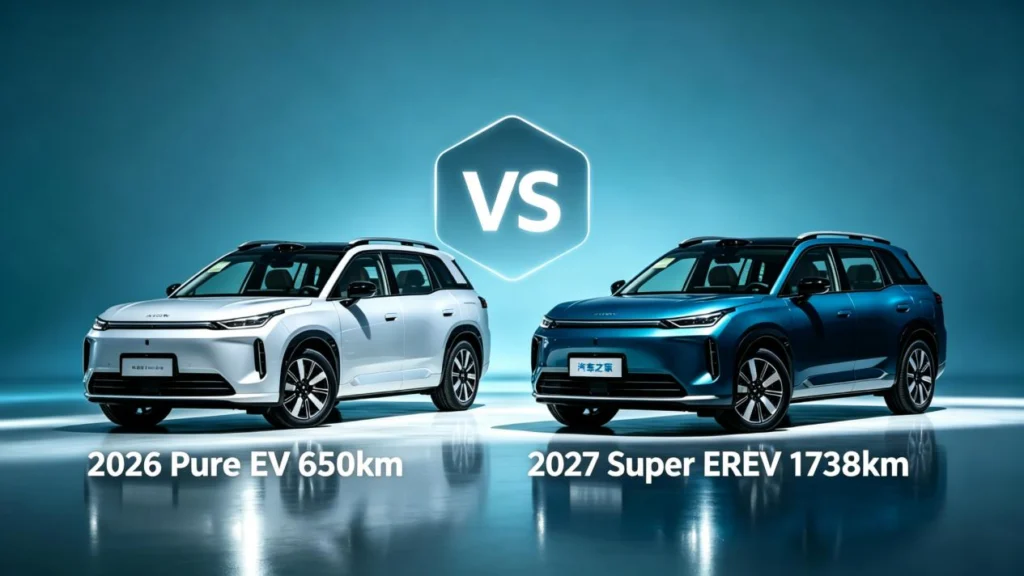
If you’re sourcing the AION i60 or helping clients choose between the Pure EV and the Extended Range (EREV) models, here’s the quick takeaway right upfront: get the 650km Pure EV if it’s strictly for city commuting, but go for the Super EREV if long-distance flexibility matters at all.
Getting 350 km of pure electric range on an EREV battery is a massive selling point—it means most drivers only need to plug in once every two weeks for daily city runs, while still having a 1,738 km total safety net for road trips.
Side-by-Side Spec Comparison
Here is how both versions compare once you strip away the press release hype:
| Feature / Spec | AION i60 EREV (2027 Model) | AION i60 Pure EV (2026 Model) |
| Powertrain Type | 1.5L Range Extender + 180 kW Electric Motor | Pure Electric (165 kW Electric Motor) |
| CLTC Pure EV Range | 350 km (High-Capacity Battery Pack) | 650 km (75.26 kWh Battery Pack) |
| CLTC Total Range | 1,738 km | 650 km |
| Smart Driving Hardware | 192-Thread LiDAR + Indicator Light | High-Speed NDA / Millimeter-Wave Radar + Cameras |
| Fast Charging (30%–80%) | 15 Minutes | Approx. 22 Minutes |
| Cargo Capacity | 66L Sealed Frunk + Rear Trunk | Rear Trunk with Multi-Tier Storage |
| Dimensions & Wheelbase | 4,685 × 1,854 × 1,660 mm / 2,775 mm Wheelbase | 4,685 × 1,854 × 1,660 mm / 2,775 mm Wheelbase |
Real Range & Charging: What to Expect in the Field
The AION i60 EREV’s 350 km pure electric range covers up to two weeks of urban commuting without requiring a single charge. Equipped with a high-efficiency 1.5L dedicated range-extender engine and a high-density traction motor, the vehicle maintains consistent electric-drive performance across low-temperature environments.
For highway and long-distance travel, the power management system ensures minimal cabin noise:
- “By optimizing the engine starter and generator algorithms, the EREV seamlessly engages the range extender when the battery state of charge (SoC) drops below 20%, maintaining noise, vibration, and harshness (NVH) levels identical to pure EV mode,” notes a lead powertrain engineer from GAC AION’s EV R&D division.
For drivers without access to home charging, the 15-minute fast-charging capability (30% to 80% SoC) brings energy replenishment times close to traditional gas refueling.
Smart Driving & Storage: LiDAR and the 66L Frunk
Two specific engineering choices stand out on the i60:
- 192-Thread LiDAR Setup: Most vehicles in this price bracket use 128-thread units. The higher point-cloud density here gives the ADiGO system much cleaner visual data at night and in heavy rain, handling complex intersections smoothly without needing high-definition maps.
- A Usable Front Trunk (Frunk): Packaging an engine and a 66L sealed frunk into the front bay of an EREV is tough. GAC pulled it off here—the front trunk easily fits a standard 20-inch carry-on suitcase, which solves a major storage headache typical of EREV SUVs.
FAQ
Q1: What is the real-world range efficiency of the AION i60 EREV?
A: In 25°C ambient temperatures at average speeds of 60–80 km/h, the 350km EREV achieves an 88%–92% range retention rate (approx. 310 km actual range). In winter conditions (-10°C with cabin heating active), the range retention rate is approximately 68%–72%.
Q2: Does the 192-thread LiDAR version support mapless urban navigation (NOA)?
A: Yes. The ADiGO end-to-end AI architecture utilizes a dual-vision and LiDAR sensor fusion system, allowing Navigation on Autopilot (NOA) across urban arterial roads and rural routes without requiring high-definition (HD) maps.
Q3: Are there differences in chassis tuning between the EV and EREV variants?
A: Yes. The EREV’s suspension is damper-tuned slightly softer at the rear to compensate for the weight of the range extender and fuel tank, reducing motion sickness. The pure EV variant features a slightly stiffer chassis setup, offering enhanced lateral support in tight corners.
About Our Insights
Hands-on data and specifications are compiled by our automotive trade & technical evaluation team. All parameters are cross-checked against GAC AION engineering documentation and pre-production vehicle testing.