
BMW M3 EV Spy Photos: Driving Fun Still Comes First as Xiaomi SU7 Ultra Joins Testing
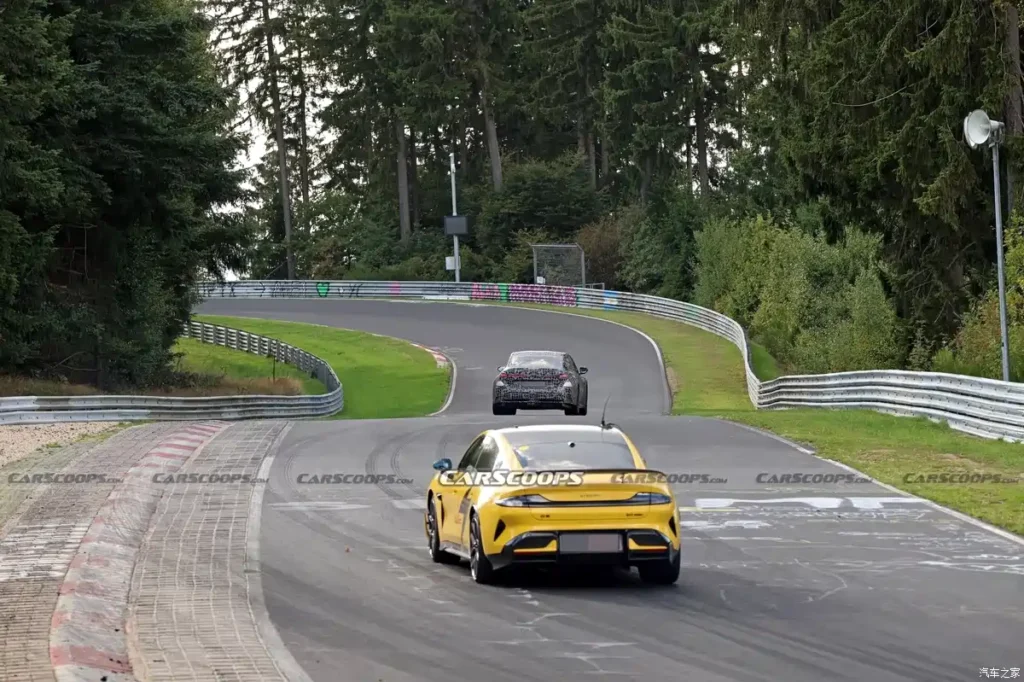
Spy photos of the upcoming all-electric BMW M3 have recently surfaced, and there is one detail that has attracted particular attention: a Xiaomi SU7 Ultra was spotted running behind the BMW prototype during track testing.
The scene is interesting for more than just the two cars sharing the same circuit. BMW appears to be using the test program to answer a question that has followed the electric M3 from the beginning: can a fully electric M car still deliver the driving character that enthusiasts expect from an M3?
BMW M3 EV Prototype Shows Its Dynamic Side
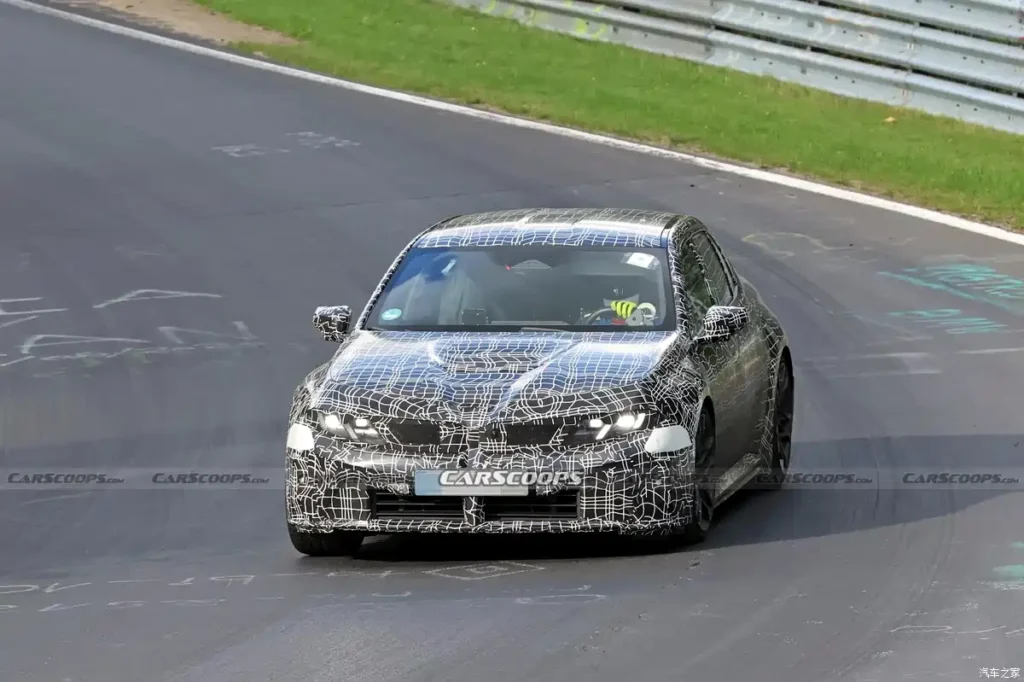
The camouflaged BMW M3 EV was seen accelerating hard out of a corner, with the rear of the car stepping out and leaving a clear tire mark on the track.
For BMW M fans, that behavior will look familiar.
The prototype was not simply being driven quickly in a straight line. Its test run showed a deliberate focus on cornering, vehicle balance and controlled wheel slip. That matters because the transition from a combustion engine to an electric powertrain has raised concerns about whether the next M3 could lose some of the character that made earlier generations so popular.
BMW’s approach suggests that outright acceleration is only part of the development target.
The yellow Xiaomi SU7 Ultra following the BMW also made the session more interesting. It stayed close to the prototype through the test run, putting two very different approaches to electric performance into the same frame.
Xiaomi SU7 Ultra Has Already Shown Its Track Potential
The Xiaomi SU7 Ultra is not an unfamiliar name when it comes to high-performance EV testing.
Its powertrain delivers a claimed combined output of up to 1,548 hp, while Xiaomi quotes a 0-100 km/h acceleration time of 1.98 seconds when the launch phase is excluded. The car’s top speed is rated at more than 350 km/h.
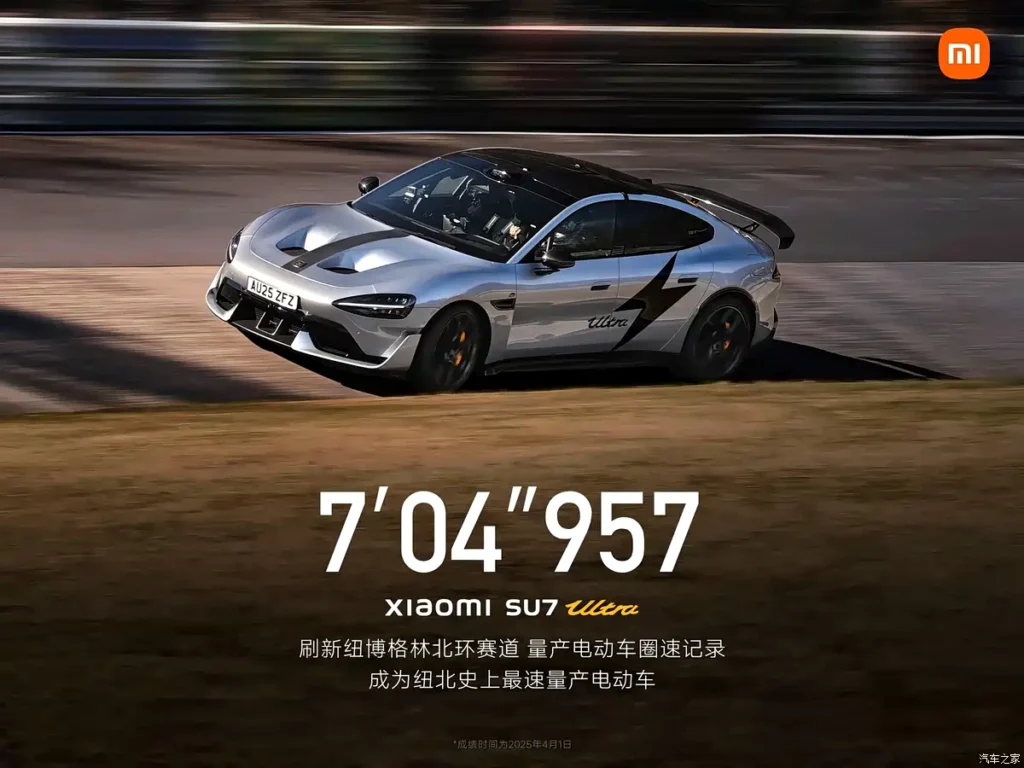
Its Nürburgring performance has also given the model considerable visibility. The SU7 Ultra officially recorded a 7:04.957 lap on the Nürburgring Nordschleife with the Track Package in 2025. That result set a record at the time in the Electric Executive Car category, although the category has since seen a faster official time.
For this reason, seeing a SU7 Ultra running behind the BMW M3 EV is more than a random detail from a test session. It provides a useful reference point for the different philosophies behind today’s high-performance electric cars.
BMW M3 EV Is Not Simply Chasing Horsepower
Compared with the Xiaomi SU7 Ultra, the next-generation electric BMW M3 appears to be taking a different route.
BMW has not yet published the final production power figure for the electric M3. However, BMW M CEO Franciscus van Meel has made it clear that the company does not see four-digit horsepower figures as the main objective.
His argument is fairly straightforward: adding more and more power does not automatically make a performance car faster or easier to drive. Once the available output becomes difficult to manage, the ability to control that power becomes more important.
That philosophy fits closely with what BMW M has already confirmed about its next-generation electric performance system.
Instead of building the car around one headline horsepower number, BMW is putting considerable engineering effort into how power and torque are delivered to each wheel.
Four Electric Motors Put Control at the Center
The most important technical feature of the new BMW M electric architecture is its four-motor layout.
BMW M has confirmed that the system will use one electric motor for each wheel. This allows the control system to adjust torque at the individual-wheel level rather than relying on a conventional all-wheel-drive system to distribute power between the front and rear axles.
The system is integrated with BMW M Dynamic Performance Control, which manages torque, power, traction and energy recuperation.
In practical terms, this gives engineers much more freedom when tuning the car for different driving situations.
For example, when exiting a corner, the system can respond to differences in wheel load and grip much more precisely. Instead of simply sending more power to an axle, it can manage the torque available at individual wheels.
That is particularly important for an M car.
Straight-line acceleration is relatively easy to demonstrate with a high-output EV. Making the car predictable, responsive and enjoyable when braking, turning and accelerating at the same time is a much harder engineering problem.
That is where BMW’s four-motor strategy becomes more interesting.
BMW M3 EV: What Is Confirmed So Far?
There are still plenty of unanswered questions around the production-spec BMW M3 EV. BMW has confirmed the core technology, but several performance figures remain undisclosed.
| Specification | Current Information |
| Powertrain | Fully electric |
| Electric motors | Four |
| Drive system | Individual-wheel drive |
| Performance control | BMW M Dynamic Performance Control |
| Electrical architecture | 800V |
| Battery | More than 100 kWh usable energy |
| Production power output | Not officially confirmed |
| 0-100 km/h | Not officially confirmed |
| Top speed | Not officially confirmed |
| Driving range | Not officially confirmed |
BMW has also highlighted the performance-oriented development of the high-voltage battery. The battery uses BMW’s latest-generation cylindrical cell technology and is designed not only for peak output, but also for sustained performance during demanding driving.
This is an important distinction for a track-focused electric car.
A very high peak power figure can look impressive on a specification sheet. Maintaining consistent performance over repeated laps requires much more from the battery, cooling system and energy management strategy.
What About the Reported 800-Plus Horsepower Figures?
There have been various reports and estimates regarding the future BMW M3 EV’s output, including figures approaching or exceeding 800 hp.
Some reports have also suggested extremely high individual axle outputs and a combined system output potentially reaching four figures.
At this stage, however, these numbers should be treated as development-stage reports rather than confirmed production specifications.
BMW has already confirmed the four-motor architecture and its ability to control power at each wheel. The final output figure is less important than understanding how that power will actually be used.
This distinction is worth keeping in mind when comparing the BMW with cars such as the Xiaomi SU7 Ultra.
Two Different Ideas of Electric Performance
The BMW M3 EV and Xiaomi SU7 Ultra show two different ways of approaching high-performance electric cars.
The Xiaomi puts an enormous amount of power and acceleration performance on the table. The numbers are easy to understand and difficult to ignore.
BMW M is taking a more control-oriented approach.
The company is developing an electric drivetrain that can continuously adjust torque at each wheel and combine that with chassis control, braking and energy recuperation. The objective is not simply to make the M3 EV extremely quick in a straight line. It is to make the car behave like an M car when the road starts to turn.
That difference may become one of the most interesting parts of the next generation of electric performance vehicles.
For drivers, a car’s performance is not measured only by horsepower, acceleration or top speed. Steering response, traction, balance, braking stability and how confidently the car responds to throttle inputs all matter.
The first electric BMW M3 will ultimately be judged on those details.
Conclusion
The latest BMW M3 EV testing images provide an early look at how BMW M is approaching the transition to electric performance.
The prototype’s aggressive cornering behavior is certainly interesting, but the bigger story is underneath the camouflage. BMW has confirmed a four-motor electric system, individual-wheel torque control, an 800V architecture and a performance-focused battery with more than 100 kWh of usable energy.
That suggests BMW is not trying to win the electric performance race simply by quoting the biggest horsepower figure.
The Xiaomi SU7 Ultra, meanwhile, demonstrates just how far electric performance has already moved. Its Nürburgring record run and extreme acceleration figures have raised the benchmark for high-performance EVs.
The next BMW M3 will therefore face a different kind of challenge. It needs to prove that an electric powertrain can deliver not only speed, but also the precision and sense of control that drivers associate with the M badge.
The answer will become clearer when the production car arrives. For now, the testing footage suggests BMW M is taking that part of the equation seriously.
FAQ
Is the BMW M3 going fully electric?
BMW has confirmed that a new generation of fully electric BMW M models is planned, with the first models based on Neue Klasse technology entering a new phase from 2027. The exact production configuration of the M3 EV will be confirmed closer to launch.
How many motors will the BMW M3 EV have?
BMW has confirmed a four-motor electric drivetrain, with each wheel powered by its own electric motor. The system is designed to allow precise control of torque and power at individual wheels.
How much horsepower will the BMW M3 EV have?
BMW has not yet confirmed the final production horsepower figure for the M3 EV. Various reports have suggested outputs in the 800-hp range or potentially higher, but these figures should not be treated as final specifications until BMW officially confirms them.
Will the BMW M3 EV use an 800V architecture?
Yes. BMW has confirmed that its next-generation electric M models will use 800V technology to support high-performance driving and faster charging.
How fast is the Xiaomi SU7 Ultra around the Nürburgring?
The Xiaomi SU7 Ultra with Track Package officially recorded a 7:04.957 lap on the Nürburgring Nordschleife in 2025. The result was officially recorded in the Electric Executive Car category.
Explore More China EV Opportunities
Interested in the latest Chinese electric vehicles, new energy vehicle technologies and export opportunities? CNEV Export provides market information and support for overseas buyers looking to source EVs and related products from China.
Visit CNEV Export to explore available models, vehicle specifications and China EV export solutions.